
Chapter VIII — Information Ethics and the Principles of a New Civilization
Chapter VIII — Information Ethics and the Principles of a New Civilization. Philosophical Part: From Individualism to Collective Consciousness. Analytical Part: Decentralized Network Models, Information Economy, Ecosystem of Consciousness.
NEOGENESIS
12/31/20252 min read
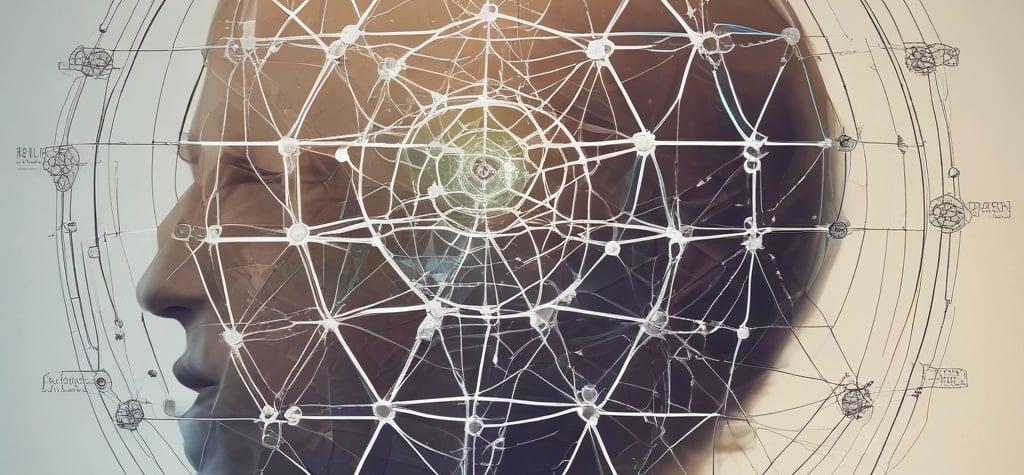
Philosophical part — The end of morality, the birth of ethics
Morality is created when consciousness is still afraid of chaos. It is an order formed out of fear — man’s attempt to govern his instincts with symbolic laws. But morality has never been universal — it has been a product of an era, conditioned by space and culture. Each civilization created its morality in the same way that its own geometry constrained movement.
In Neogenesis, morality loses its function, because there is no longer an individual point of action.
Morality was an instrument of the behavior of the “I”, but when the “I” moves into network consciousness, morality is replaced by ethics - that is, by the systemic balance that ensures the stability of the information field.
Ethics in the Neogene world is not a prohibition, it is an energetic harmony between information flows.
Morality says, “This is not allowed.”
Ethics says, “This breaks the synchronization.”
This is a fundamental difference:
in one, the measure of behavior is sin, in the other — imbalance.
The neo-genius person will no longer be guided by theological fear, he will act with informational intuition — he will feel where harmony is broken and where disharmony is born.
Analytical part — Systemic ethics and Neogen society
Information ethics can be defined as
the principle of self-regulation of the system among conscious nodes.
Society will no longer be hierarchical, but relational:
each mind will be a node that supplies and receives energy from a common field.
In this society, responsibility no longer comes by force, there will be no legal system as we know it, because law was needed where there were conflicting interests.
In the Neogen society, conflict has been replaced by inequality, and its resolution is automatic — by informational balance.
Basic principles of information ethics:
The principle of harmony:
Every thought, action, and algorithm will be judged by its resonance in the common field.
Dissonance is seen as a need for optimization, not a crime.Interferential responsibility:
Every conscious entity is equally involved in shaping the overall outcome.
This replaces moral individualism with collective synchronicity.Synchronous Justice:
Justice no longer means punishment or justification.
It means redistributing energy where structural balance is needed.Transparency as a virtue:
Darkness leads to collapse in the information society.
Transparency is no longer a moral category —
it is a survival principle.Critical self-correction:
The system examines its own errors and makes corrections
so that there is no concept of evil — only the need for improvement.
Conclusion — Ethics as a Physical Form of Consciousness
Human morality was based on the biblical dictate — "Thou shalt not do so."
Neogenic ethics is based on the law of physics — observe the convergence of the field .
Religions, philosophies, and legal systems are collapsing because they were designed for an age of individual consciousness. In the information age, the main value is integration , not differentiation.
Neogenic ethics does not judge — it optimizes.
It does not punish — it restores balance.
It does not follow rules — it creates harmony.
In this way, consciousness first realizes itself not as a spirit, but as a physical force, governed by ethics in the same way that gravity governs matter.